
Perimeter and adhesive
Review edge width, bonding surface, adhesive pattern and possible liquid paths.
MEMBRANE-SWITCH ENGINEERING OPTION
Control likely exposure paths through the overlay, perimeter, windows, adhesive interfaces and tail exit—together with the customer enclosure.
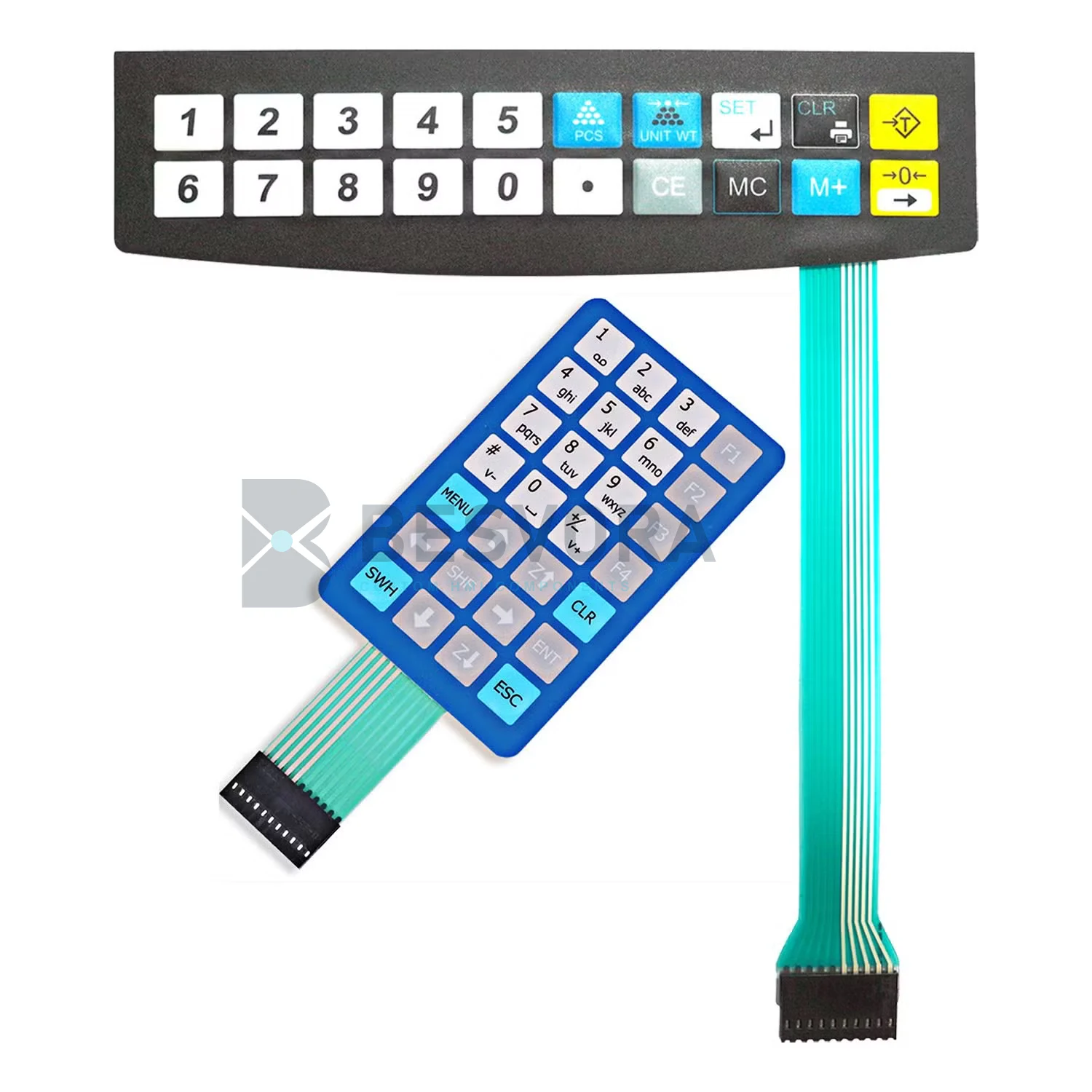
ENGINEERING OVERVIEW
Water, condensation, cleaning liquid and contamination can reach an interface through edges, openings, windows, tail exits, connectors or the enclosure behind the membrane switch. Each likely path needs to be identified before the stack and adhesive pattern are proposed.
The membrane component can be designed to support the required sealing strategy, but the installed result also depends on the mounting surface, compression, housing and customer assembly process.
“Water-resistant” does not mean universally waterproof. Any IP rating or immersion claim requires a defined specimen, assembled condition, test method and acceptance result for the applicable component or equipment.
STARTING INFORMATION
You do not need every answer before contacting us. Send what is available and the missing points can be identified during clarification.
Splash, wipe-down, condensation, outdoor use or other relevant conditions.
Chemicals, contact time, temperature, pressure and frequency.
Bonding area, edges, windows, openings and surface material.
The component or equipment condition, method and acceptance rule to be evaluated.
POSSIBLE APPLICATIONS
Suitability depends on the final construction, equipment interface and customer validation.
COMMON QUESTIONS
No. The target and test boundary can be reviewed, but the claim needs evidence from the defined component or finished assembly.
The housing, mounting surface, openings and assembly method can create or close exposure paths outside the membrane component.
DISCUSS YOUR PROJECT
Start with a short description of sealed & water-resistant. Drawings or confidential files can be shared later through business email, WhatsApp or another agreed channel.